Future Minerals Forum 2026: Capital & Policy Converge | Cireta
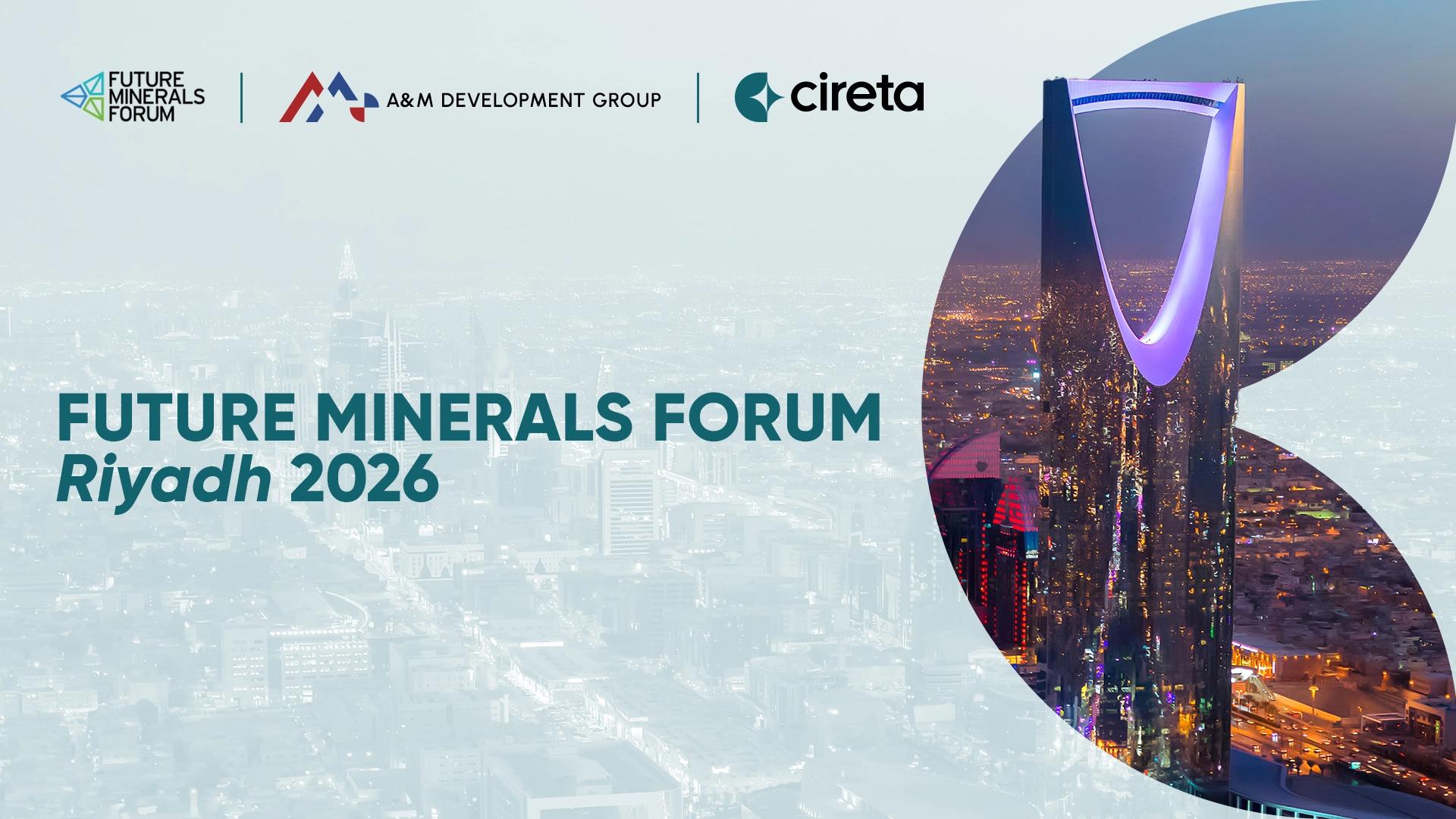
Riyadh has quietly become one of the most important meeting points for global conversations around minerals, energy, and infrastructure, not because of headlines or announcements, but because of the nature of the discussions now taking place.
Why Are Global Minerals, Capital, and Policy Converging in Riyadh?
At this year's Future Minerals Forum, the focus was not on speculation or short-term price movements. It was on supply chains, capital alignment, and how strategic resources are developed, financed, and brought to global markets under increasing scrutiny.
This shift matters.
From Resource Ownership to Resource Access
For decades, the global commodities market has been shaped by ownership concentration and fragmented access. Large institutions understood the value of minerals and energy infrastructure, but entry points were limited, opaque, or burdened with operational and political risk.
What Is Changing in Global Resource Markets?
What emerged clearly in Riyadh was a shared recognition that access is now the defining challenge. Capital is available, but it is selective. Investors want earlier exposure, clearer structures, and risk mechanisms that match modern compliance and governance standards.
In short, capital is no longer chasing assets blindly. It is demanding structure.
How Is the Middle East Shaping Global Resource Policy?
The Middle East's growing relevance in global resource markets is not accidental. Governments across the region are aligning industrial policy, capital markets, and infrastructure development around long-term strategic goals.
This alignment creates an environment where mining, energy, and industrial assets are not treated as isolated projects, but as part of broader economic systems. For investors, this reduces uncertainty. For operators, it increases accountability. For markets, it creates momentum.
Riyadh reflects this convergence clearly. It is not positioning itself as a speculative hub, but as a place where policy, capital, and physical supply chains intersect.
Why Is Tokenization Alone Not Enough for Institutional Investors?
One recurring theme across discussions was the growing interest in digital access to real-world assets. Tokenization is increasingly understood as a tool for efficiency and transparency, but there is also a clear recognition of its limits.
Digital representation without legal structure, verified supply, and risk protection does not solve the underlying problem. In fact, it often introduces new risks.
Institutional capital is not looking for shortcuts. It is looking for frameworks that integrate:
- verified assets
- compliant ownership structures
- credit and delivery protection
- transparent settlement
Technology plays a role, but only after these fundamentals are in place.
How Does Cireta Approach Tokenized Real-World Assets?
Cireta was built around this exact intersection. Rather than approaching tokenization as a standalone innovation, Cireta focuses on structuring real-world assets in a way that institutions can actually engage with.
That means starting with the asset itself, establishing legal and operational clarity, and layering technology only where it adds measurable value.
This approach aligns directly with what is emerging in markets like Riyadh. The demand is not for novelty. It is for reliability.
As access to minerals, energy, and industrial infrastructure expands, platforms that can bridge physical supply and institutional capital responsibly will define the next phase of the market.
What Does the Future Minerals Forum Signal for RWA Markets?
What Riyadh ultimately highlighted is that the global resource market has moved past theoretical conversations. The focus now is execution.
The key questions driving institutional interest are practical ones: How are assets verified? How is risk allocated? How does capital enter without compromising compliance or governance?
These are not future questions. They are current ones.
The convergence of minerals, capital, and policy in Riyadh is not a trend to be marketed. It is a signal to be understood.
For platforms operating at the intersection of real assets and structured access, that signal is clear: the market is ready, but only for solutions built on substance.
Important Information
The information provided on this website is for general informational and educational purposes only. Nothing on this site constitutes, or should be understood as constituting, financial, investment, legal, or tax advice. You should not rely on any information presented here as a basis for making financial decisions.
Past performance of any asset, token, or investment strategy discussed on this site is not indicative of future results. Any projections, estimates, or forward-looking statements are for illustrative purposes only and are subject to risks, uncertainties, and assumptions that may cause actual outcomes to differ materially.
Acquiring tokenized assets involves significant risk, including but not limited to market volatility, regulatory changes, liquidity constraints, and the potential total loss of your investment. Tokens provide economic exposure to underlying assets but are not themselves stocks, ETFs, bonds, or commodity futures.
Cireta operates under the regulatory frameworks of the jurisdictions in which it is active. Token offerings may not be available in all jurisdictions. It is your responsibility to ensure compliance with local laws. Always consult a qualified, independent financial advisor before making investment decisions.